Maximizing Business Growth: The Power of Productizing Your Service Offering with Software Solutions  

legacy app modernization

In today’s highly competitive business landscape, organizations are constantly seeking strategies to achieve sustainable growth and success. One such strategy that has gained significant importance is productization. By transforming services into scalable, profitable, and marketable products, businesses can unlock new opportunities, increase efficiency, and meet evolving customer demands.  Understanding Productization Productization is not limited to […]

National Association CMS: Digital Renewal Strategy & Implementation

Services : Full Stack Development

National Association CMS: Digital Renewal Strategy & Implementation

Technology Stack


Project Overview


Mantrax recently proposed a CMS (Content Management System) for a National Association facing numerous pain points. Members were frustrated with the online experience. The existing member portal has frustrated members due to usability issues, navigation challenges, and a need for more intuitive features. This dissatisfaction hampers member engagement and overall perception of the association’s value.

The Goal


To find a resolution, the following projects were initiated:

  • Phase 1: Functional Research to understand stakeholder’s pain points with the online platform.
  • Phase 2: Complete modernization of the legacy platform.

Project Challenges

01

Stagnant Membership

The recent stagnant membership growth is partly due to a subpar member portal. Attracting and retaining new members is challenging without a user-friendly platform that boosts engagement and interaction.

02

Risk of Member Attrition

Emergence of alternative platforms for key functions like recruiting and visibility poses a major threat. Members may be drawn to rival platforms with better experiences and solutions, risking membership loss.

03

High Operating Costs

Inefficiencies in the current member portal have raised operational costs. Members frequently seek staff support, adding workload and expenses, and diverting resources from strategic initiatives.

Phase 1


Functional research to create CMS

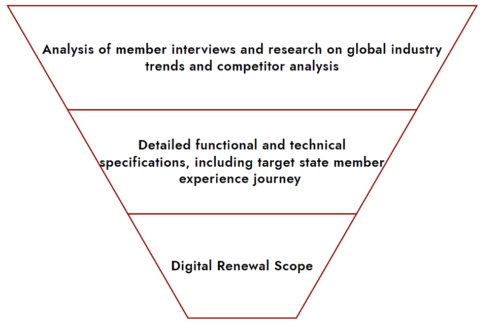
In Phase 1, we facilitated member feedback collection through a neutral platform. This input was then combined with system diagnosis and external research, comprising six functional analysis activities.

30 Member Interviews

Consolidated member interviews with actionable insights & prioritized implementation lists.

System Review

Consolidated member interviews with actionable insights & prioritized implementation lists.

Website & Portal Content Audit

Consolidated member interviews with actionable insights & prioritized implementation lists.

Website Analysis

Consolidated member interviews with actionable insights & prioritized implementation lists.

User Activity Assessment

Consolidated member interviews with actionable insights & prioritized implementation lists.

Global Industry Research

Consolidated member interviews with actionable insights & prioritized implementation lists.

The result was a complete 360-degree analysis of member experience

Phase 2


End-to-end modernization of the legacy CMS

Phase 2 of the modernization journey represents a pivotal step towards aligning the association’s digital ecosystem with contemporary standards. By focusing on user experience, linguistic inclusivity, data security, and advanced functionality, the organization is poised to set new benchmarks in member engagement and digital transformation. This strategic initiative underscores the commitment to excellence and responsiveness, ensuring that the member portal remains an indispensable asset as the organization continues to evolve.


Core Objectives

The second phase of the member portal modernization initiative encompasses a comprehensive development scope that aims to revolutionize the digital landscape of the organization.

Universal style guide creation

Crafting a universal style guide that harmonizes the design language across both national and district websites. This cohesive visual identity fosters a seamless and recognizable UX.

Bilingual interface

Implementing bilingual support for French and English languages, catering to the diverse linguistic preferences of the association’s members

Enhanced UX & scalability

Upgrading infrastructure for improved user experience, scalability, availability, and adaptability. This empowers the portal to evolve with organizational needs

Revamped web design

We’ve completely revamped national and district websites with data-driven single-page web applications, boosting engagement and data accessibility.

Member profile & data migration

Seamlessly migrating member profiles and sensitive PII data, adhering to industry-standard data governance policies with a strong focus on security and compliance

Dynamic availability calendar

Introducing an availability calendar tailored for members, enhancing their ability to engage with key events and activities efficiently.

Configurable content framework

Introducing a flexible content framework for national and district-level customization, empowering administrators to engage specific audiences.

Granular content control

Enabling granular content control via role-based access, providing administrators with effective tools for content management at various levels.

Services Provided

Functional Research
UI/UX Design
Full Stack Development
Quality Assurance
Project Management
Database Design
Training
Change Management

What our client says

The team at Mantrax combines a deep, thorough knowledge of leading software development solutions with first-rate technical skill and dedication to their work. Their people know how to balance speed, costs and quality in a product, and – when facing unknowns and making decisions that will impact the future of your organization – they offer honest, accountable and credible counsel delivered in an environment of open and ongoing communications.
Ian Gillespie
Director of Communications, Directors Guild of Canada

Modernizing Your Legacy CMS/AMS: Unraveling Key Questions  

Membership-based organizations such as professional associations, trade associations, foundations, regulatory bodies, non-profits, unions, clubs, voluntary associations, chamber of commerce, board of trades, and guilds face the challenge of adapting to changing member expectations and technological advancements. Customized Association Management Software (AMS) is increasingly becoming a necessity for organizations with unique requirements and a substantial member […]

Streamline Your Business Operations With Powerful Cloud Solutions  

Cloud solutions have transformed the way businesses operate, offering a myriad of advantages and solutions. From streamlined operations and enhanced scalability to improved collaboration and cost-efficiency, cloud technology has become a game-changer for enterprises of all sizes across various industries. Read on as we look at the basics and benefits of cloud solutions. What Are […]

Breaking Free from Traditional Methods: Why Agile is the Future of Software Development  

traditional development methods

In today’s fast-paced and dynamic business environment, traditional software development methods, such as waterfall, often fall short of meeting the ever-changing needs and expectations of customers. This is where agile methodology shines. Agile development offers a transformative approach to software development that prioritizes iterative feedback cadence, flexibility, collaboration, and end-user engagement in the full project […]

Multi-Tenant SaaS Application for Sports Club Management with Global Users

Multi-Tenant SaaS Application for Sports Club Management with Global Users

Project Description

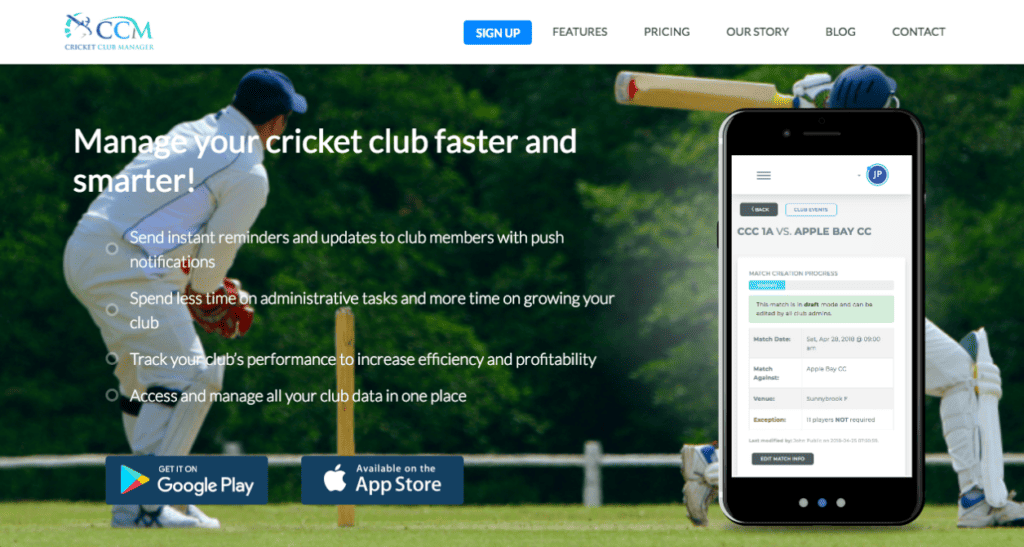
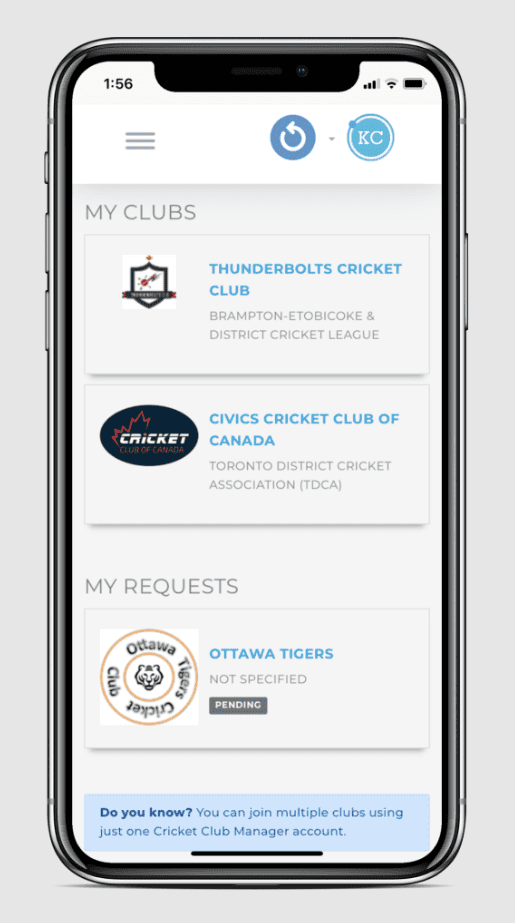
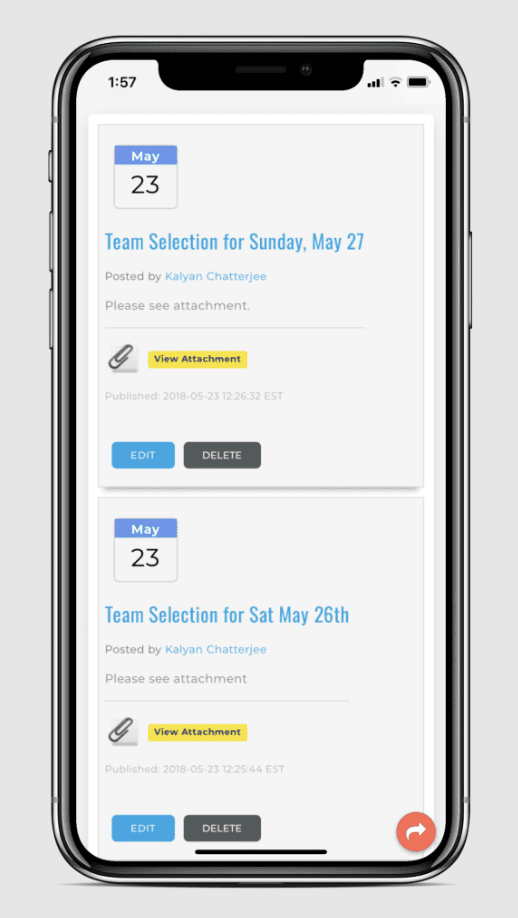
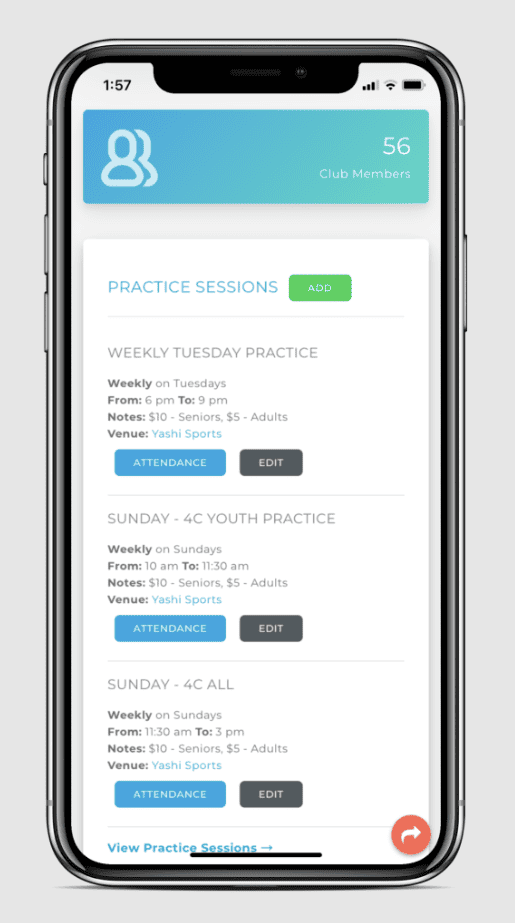
In 2018 Mantrax delivered Cricket Club Manager, a custom web application and mobile app to help sports club owners minimize administrative tasks and enhance the member experience.  Our client required a design and delivery of a minimal viable product to strike the right balance between speed-to-market, feature robustness, and cost.

The Problem

Cricket is the fastest-growing sport in Canada and cricket clubs are forming across a wide range of sectors from for-profit recreational clubs to corporate clubs and university and college clubs. With memberships growing, club administration required better tools to help manage day-to-day tasks such as player availability and match schedules, and last-minute match updates.

Our Solution

Budget

Because managing membership fees was an ongoing challenge for sports clubs, a limited budget was available for a custom application. The minimal viable product we developed met budget constraints as well as client objectives.

How We Made It Possible

After careful planning, we chose to build the application on the LAMP stack (Linux, Apache, MySQL, and PHP) due to its ubiquity, availability of support, affordable hosting options, and mature frameworks. After developing the application, we worked on social media marketing to increase the adoption rate, club sign-ups, and traffic. Cricket Club Manager is now being used by almost 100 clubs worldwide.

Services Used

  • Full Stack Development
  • Strategy & Implementation Consulting
sports club management
ccm

ERP Re-Implementation for a Multinational Manufacturing Client

Case study: IFS ERP re-implementation

ERP Re-Implementation for a Multinational Manufacturer

A multinational manufacturer removed every core code customization from its IFS ERP and moved from IFS Apps 8 to Apps 10. The business now runs on standard IFS functionality and saves $200K a year in operating expenses.

Client
Multinational manufacturer
System
IFS ERP, live since 2016
Mandate
Standard IFS Apps 10 in one year, within budget
Mantrax role
Independent project lead, from partner selection through delivery

Four years in, the ERP was holding the business back

The client went live on IFS in 2016 with a heavily customized build. By 2020 the customizations cost more than they returned.

Half the system sat unused

50%

The business used about 50% of the IFS functionality it had purchased.

Half the customizations sat unused too

~50%

Only about 50% of the customizations built in 2016 were still in use.

  • Custom code caused downtime

    Outages traced back to changes made to IFS core code.

  • The upgrade path was closed

    The client was still on the version installed in 2016. Heavy customization blocked every new IFS release.

  • The business had lost confidence

    Teams resisted any new initiative that touched IFS.

The mandate: back to standard IFS in one year

The client chose to re-implement, not patch. The goal was to retire the custom code and run the business on standard IFS.

  1. 2016Go-live on IFS with heavy customization
  2. 2020Still on the 2016 version, with 50+ core code customizations
  3. Re-implementationOne-year mandate to move from Apps 8 to Apps 10
  4. TodayStandard IFS Apps 10, no core code customizations

What the client asked for

  • Eliminate 50+ core code customizations and move the business to standard IFS functionality.
  • Move the functionality in use from IFS Apps 8 to IFS Apps 10 within one year.
  • Stay within budget.

What Mantrax committed to

  • Protect day-to-day operations. The project could not tax the people running the business.
  • Let the business decide. The client's business team led every process decision. The project team presented the standard IFS options.
  • Make the project a good experience. After 2016, the project team and stakeholders needed a reason to trust the system again.

What Mantrax did

Mantrax ran the program as the client's independent lead, from partner selection through delivery.

  1. Selected the IFS partner

    Mantrax ran a structured selection: RFQ, vendor interviews, customer reference calls, and pilot projects with the shortlisted firms. The client chose its partner on demonstrated work, not a proposal.

  2. Structured the gap analysis

    Mantrax worked with the IFS partner and the client's subject matter experts to map the current system against standard Apps 10 functionality. Each gap was sorted into technical, functional, business process, or change management work, so the full effort was visible before the build started.

  3. Built the internal team

    Mantrax assessed the IFS skills and capacity the client had against what it would need. It then ran recruitment and onboarding to fill the gaps before re-implementation began.

  4. Managed the project day to day

    Mantrax provided hands-on project management, coached team members, and managed risk actively to hold the timeline.

  5. Managed every external vendor

    Mantrax aligned all vendors on the project objectives, set weekly work plans, and controlled the overall budget.

Results

The client now runs on standard IFS Apps 10 with no core code customizations.

  • 100% of core code customizations eliminated The source of the downtime is gone, and new IFS releases are usable again.
  • 100% of project scope delivered Every function the business relied on in Apps 8 moved to Apps 10.
  • 50% reduction in project resource allocation In line with the commitment to protect daily operations.
  • $200K annual savings in operating expenses A recurring saving, every year after go-live.
BeforeAfter
IFS versionApps 8, installed 2016Apps 10
Core code customizations50+None
New IFS releasesBlocked by customizationsUsable
How the business runsOn a customized buildOn standard IFS functionality

What made the difference

Four choices separated this project from the 2016 implementation.

  • The business owned the process decisions

    The project team showed how standard IFS could handle each process. The business chose. That is how a team that resisted IFS came to accept standard functionality.

  • The partner was tested before it was hired

    Pilot projects with shortlisted vendors showed how each firm worked before the client committed.

  • The internal team was built first

    The client filled its IFS skill and capacity gaps before the re-implementation, not during it.

  • One party held the vendors, the work plan and the budget

    Mantrax sat on the client's side of the table and managed all three together.

Is your ERP in the same position?

If your system is years behind the current release and customizations are the reason, the path back to standard is known. A discovery call covers where your customizations sit, what standard functionality now replaces, and what a re-implementation would take.